

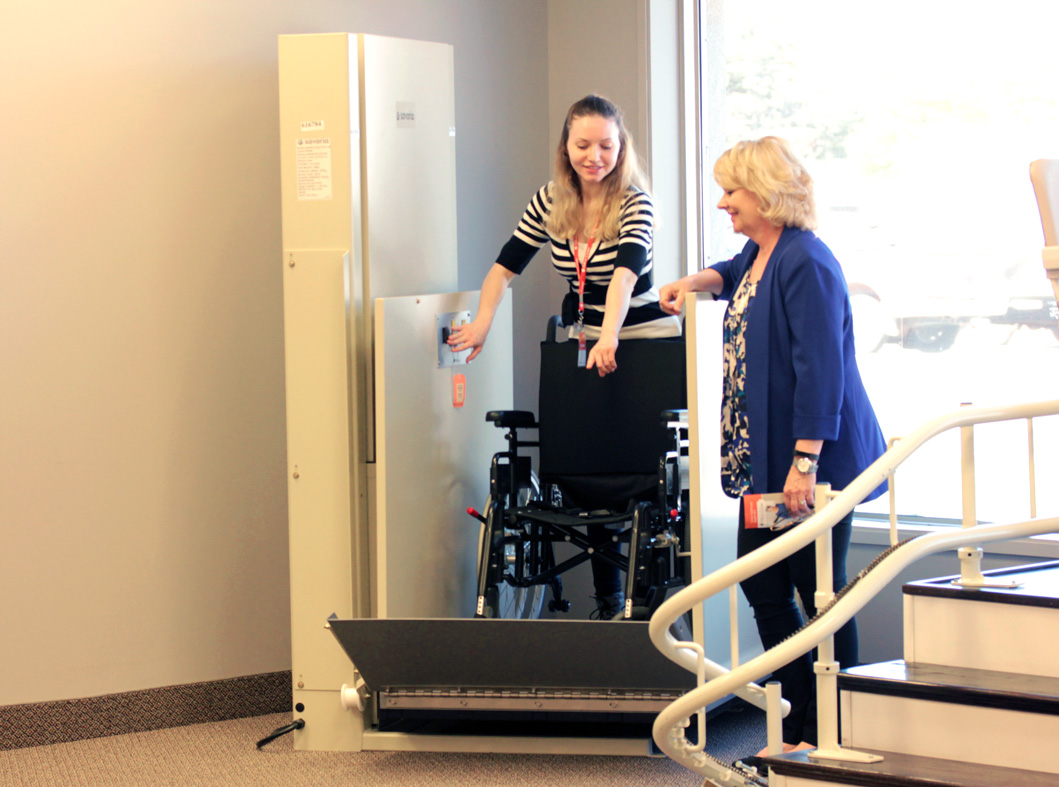
Wheelchair lifts.
Many people associate them with doctors’ offices, supermarkets that are multi-leveled, and, of course, shopping centers.
Over the last decade, a decline in price and increased accessibility have led to a surge in people installing these lifts in their homes. One of the reasons that has been suggested is the rise in the number of older people who are looking to maintain their independence at home.
So, if you are looking to have a wheelchair lift installed in your home, and you want to know which option is the most suitable for you and your family member, here are the key safety features to check for before you start the installation.
Emergency Stop Button
This is a key one, as it allows you, as the user or the caregiver, to halt the lift in case there is a malfunction or an obstacle.
For wheelchair lifts, if you notice an odd noise, that the lift feels clunky, is creaking, or there is an instability in how the lift is moving, this button will prevent injury, damage to the lift, and even the surrounding area. For any older citizens in your home, this button should be clearly labelled and located on the control panel at a lower level. So, check the blueprint for the control panel, and if needed, you may want to get a lever fitted to operate this button.
Safety Sensors (Obstacle Detection)
Most people who have used lifts in a shopping mall or hospital have fallen victim to this feature, usually at the worst time! However, having an at-home wheelchair lift with safety sensors can prevent damage to the lift and your home, and, like the stop button, it can also prevent injuries. Be sure to ask about the type of safety sensors the lift comes with. Many at-home wheelchair lifts use infrared sensors paired with pressure-sensitive edges, which automatically stop the lift when something is detected.
Non-Slip Platform Surface
Another thing to think about is the stability of the floor in the lift itself. Try to opt for one that has a textured or rubberized surface, with higher traction. This is ideal if you or the person in your family who will be using this lift loves the great outdoors, as these mats or features will prevent issues with stability while using the lift.
Safety Brakes (Automatic)
These are core features to ask about before having a wheelchair lift installed. Automatic or emergency safety brakes engage immediately when the lift is moving too quickly or is sliding backwards, which can happen due to issues with the hoists or even power surges. Make sure this works and ask the installation team how to maintain them correctly.
Guard Rails and Safety Gates
All wheelchairs have brakes built in, but to ensure the safety of everyone in the lift, you should make sure that there are guard rails and lockable safety gates installed. In many cases, it may be best to have a lift that will not move until the safety gate is closed, as this offers more safety features and prevents roll-off during the movement of the lift.