How Travel Apps Are Enhancing Tourist Experiences
The days of navigating an unfamiliar foreign city with a bulky paper map, a printed itinerary, and a translation phrasebook tucked under your arm are officially over. The digital revolution has fundamentally restructured the global tourism industry, and at the center of this transformation is the mobile smartphone. Today, travel applications have shifted from basic booking portals into highly sophisticated, real-time travel companions that accompany tourists through every phase of their journey.
By seamlessly combining location tracking, cloud computing, and advanced data processing, modern travel applications have removed major friction points from the tourism experience. They have empowered individuals to explore remote destinations with unprecedented confidence, transformed how travelers interact with local economies, and introduced a level of personalization that was completely unimaginable just a generation ago.
The Elimination of Logistic Friction and Anxiety
Historically, the most stressful elements of international or domestic travel were centered around logistics and documentation. Managing physical flight tickets, hotel vouchers, train passes, and tour reservations created constant low-level anxiety about losing essential paperwork far from home.
Travel applications have solved this problem by creating unified, digital hubs for all travel data. The moment a tourist books a component of their trip, the information is automatically imported, organized, and updated in real-time within a single application interface.
This logistic streamlining manifests in several critical ways:
-
Dynamic Itinerary Management: Flight delays, gate changes, and terminal updates are pushed directly to the user’s home screen, often before the airport announcement system broadcasts the modification.
-
Contactless Boarding and Check-in: Digital barcodes, near-field communication passes, and digital room keys allow tourists to bypass long airport and hotel check-in lines completely, maximizing their exploration time.
-
Centralized Expense Management: Integrated currency conversion tools and digital wallet tracking allow travelers to monitor their spending across various foreign currencies effortlessly, preventing unexpected budget shortfalls.
Democratizing Local Discovery and Hyper-Personalization
In the past, tourists often fell into predictable, overcrowded tourist traps because they lacked access to reliable information about a destination’s true culinary and cultural landscape. Discovery relied on generic guidebooks that were frequently outdated by the time they went to print.
Modern travel applications have completely democratized the discovery process by leveraging hyper-localized crowd-sourced data and advanced recommendation algorithms. Instead of offering a one-size-fits-all list of attractions, these platforms analyze a user’s unique preferences, past behaviors, and real-time parameters—such as the current weather, time of day, and precise geographic location—to suggest highly personalized experiences.
For instance, a tourist standing near a historic square on a rainy Tuesday afternoon will receive targeted recommendations for nearby indoor museums, artisanal coffee shops, or hidden local bistros. This level of responsiveness allows travelers to pivot their plans fluidly, discovering authentic regional gems that would otherwise remain hidden from traditional tourist sightlines.
Navigating Linguistic and Cultural Barriers
Stepping into a country where you do not speak the local language can be an incredibly isolating experience, often restricting a tourist’s willingness to step outside highly commercialized international resort zones. Travel applications are systematically dismantling these communication barriers, opening up the entire world to deeper exploration.
Real-time translation applications have evolved far beyond basic text-input dictionaries. Contemporary translation software utilizes the smartphone camera to instantly overlay translated text on top of foreign street signs, transit maps, and restaurant menus.
Furthermore, voice-to-voice translation algorithms enable fluid, back-and-forth conversations between tourists and local shopkeepers, taxi drivers, or artisan craftsmen. By facilitating authentic communication, these apps transform the tourist experience from a passive, observant spectacle into an active, respectful cultural exchange.
Enhancing Transit Mobility and Urban Exploration
Navigating complex municipal transit infrastructure in a foreign mega-city—whether it is the Tokyo subway network, the London Underground, or the bus systems of South America—has historically been a major source of intimidation for visitors.
Transit-focused travel applications have completely mitigated this stress by providing real-time, multi-modal route planning. These applications ingest live data from local transport authorities to calculate the absolute fastest, most cost-effective path from point A to point B.
They tell the user exactly which train platform to stand on, which bus exit to take, how many stops are remaining, and precisely when to prepare to disembark. Furthermore, the integration of ride-hailing and micromobility apps—such as electric scooter and bike sharing—ensures that the last mile of a tourist’s journey is just as seamless as the first, eliminating the risk of getting lost or falling victim to unregulated taxi scams.
Augmented Reality and Immersive Historical Context
One of the most exciting frontiers in tourist technology is the integration of augmented reality into sightseeing and cultural heritage applications. For centuries, visiting an ancient ruin or an architectural landmark meant looking at weathered stone blocks and trying to imagine their past grandeur through a short plaque or a tour guide’s description.
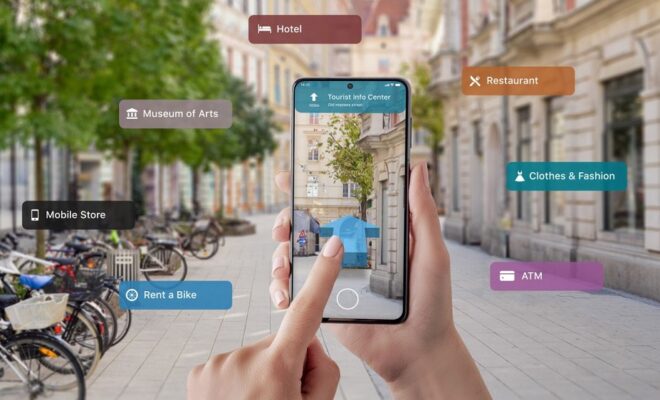
Augmented reality travel apps are transforming these historical sites into interactive, educational experiences. By simply holding their smartphone camera up to a historic building or an archaeological excavation site, tourists can see a flawless digital reconstruction of what the structure looked like hundreds or thousands of years ago overlaid directly onto the physical environment.
These apps act as private, on-demand digital historians, providing deep contextual background, interactive stories, and architectural details without requiring the traveler to crowd around a physical tour group, dramatically elevating the intellectual value of the excursion.
Frequently Asked Questions
How do travel applications maintain functionality when a tourist loses internet connectivity in a remote area?
To combat data loss and expensive international roaming fees, the vast majority of modern travel applications offer comprehensive offline modes. Travelers can download detailed city maps, localized navigation systems, translation data packs, and digital itinerary documents directly to their device hardware while connected to hotel Wi-Fi. Once the user enters a cellular dead zone, the application utilizes the phone’s internal, hardware-based Global Positioning System sensor to track location and provide full utility without requiring an active cellular data stream.
Do personalized recommendation algorithms create a new form of tourist crowding at specific locations?
Yes, this is an emerging challenge known as algorithm-driven crowding. When a popular discovery application highlights a specific hidden cafe or an off-the-beaten-path viewpoint, thousands of tourists are directed to that precise location simultaneously. To mitigate this issue, advanced travel applications are beginning to integrate real-time crowd-density trackers and predictive peak-hour graphs, advising users to visit alternative destinations or adjust their timing to avoid long queues and preserve the quality of the experience.
How do travel applications protect user financial data when making bookings over public networks?
Reputable travel applications utilize enterprise-grade security protocols, including end-to-end encryption and secure socket layer technology, to safeguard credit card details and personal identifiable information. Furthermore, many apps integrate seamlessly with native mobile payment ecosystems, which utilize tokenization. This process sends a one-time, randomized digital token to finalize transactions rather than exposing the user’s actual credit card numbers to local merchant servers or vulnerable public Wi-Fi networks.
What impact do travel apps have on the economy of local tourism businesses in developing regions?
Travel applications act as a powerful double-edged sword for local economies. On the positive side, they allow small, family-owned boutique hotels, independent tour operators, and regional restaurants to market their services directly to a global audience without needing massive marketing budgets, increasing their financial viability. On the negative side, high commission fees charged by massive global booking platforms can eat into the narrow profit margins of these local enterprises, making direct booking tools within apps highly critical.
How do modern applications assist tourists who encounter medical or security emergencies abroad?
Emergency responsiveness is a major area of development for safety-focused travel apps. Many applications feature integrated, location-aware SOS buttons that instantly connect tourists with local emergency services, dispatching precise geographic coordinates even if the traveler does not know their exact address. Additionally, duty-of-care and travel insurance applications provide real-time alerts regarding sudden political unrest, severe weather threats, or health advisories in the immediate vicinity, advising users on safe evacuation routes.
In what ways are travel applications adapting to the growing demand for sustainable tourism?
Sustainable tourism integration has become a major priority for modern travel platforms. Many navigation and flight-booking applications now include carbon footprint calculators, displaying the specific greenhouse gas emissions associated with different flight paths or transit choices. Apps actively highlight eco-certified accommodations, promote walking or cycling routes over vehicular transit, and guide tourists toward community-based tourism initiatives that ensure financial expenditures directly benefit local conservation and social programs.